Podcast Episode 3: Three EV Startups (Two Bankruptcies, One Robot Pivot) plus story roundup: Inclusive Coding, AI Negotiator, Disney’s New CTO

What happened to the EV companies in LA’s South Bay? In episode three of Compile LA, Darren Alfonso looks at Fisker, Faraday Future, and Canoo: what they set out to build, where things went wrong, and what their stories say about building a lasting business.
From Fisker’s delivery problems to Faraday Future’s move into robotics and Canoo’s changing strategy, the episode traces the gap between raising money and delivering a product. Darren also explains the SPAC boom that connected all three companies and considers what LA’s current AI wave can learn from it.
Plus, a visit to the Inclusive Coding Festival in Irvine, a look at Edge Negotiation Group’s AI Deal Advisor, and questions about Disney’s relationship with the team behind Character.ai.
Links and Sources

 The Edge Negotiation Group
Transcript
[00:00:00]
Hey, everybody. Welcome to episode three. I'm your host, Darren Alfonso. This week, we're trying to combine, I'm trying to combine the deep dive and the weekly LA tech story roundup into one episode. Have it be a little bit longer. this past week, Faraday Future spun off its robotics business, and it had me wondering about the EV companies that I remember being in the South Bay, 'cause there was a few that I remember reading about over the past few years.
So we're diving into Fisker, Faraday Future, and Canoo. Who are they? What happened to them?
First up, Fisker. Fisker was founded by Henrik Fisker in 2016, and it made electric vehicles. Henrik Fisker was a designer. He's worked on cars since 1989 at places like BMW, Ford, Aston Martin, and he had [00:01:00] another car company from 2007 to 2013, and that was focused on plug-in hybrids.
So 2016, new company focused purely on EVs. The original headquarters was in Torrance, then they eventually moved to Manhattan Beach in October of 2019, teaser images of their first car, the Fisker Ocean, are released, and a month later they're taking $250 refundable pre-orders. In January of 2020, full images, released, pricing comes out.
The base model is 38K. The model that is in the marketing is 69K, which is a common thing. Car companies will have different price points, but they'll focus on the higher-end one in their publicity. In October of 2020, they go public, uh, via a SPAC, which I'll get into what that is later.
But essentially they go public. [00:02:00] People can buy their-- buy shares of Fisker. Then they move their offices from Torrance to Manhattan Beach and Fisker-- Henrik Fisker had an interview and he said, "LA is the inspiration for who we are as a company and how we design our vehicles. Two aspects of this. One is the LA lifestyle and the other is sustainability.
The LA lifestyle is about having fun and being laid back, and that is really what our vehicle tries to transmit." Great. Proud of being in LA. I'm down with that. I drive by this building that they had mo- they moved to in 2020. I drive, I drive past it on my way to Costco, and what used to be in that building was True Religion, the jeans company.
It's a nice area. Uh, there's now an Erewhon within walking distance, so that tells you what you need to know about it being a nice area.
Couple years later, November of [00:03:00] 2022, they start actually producing these vehicles in Austria.
And their target, they wanna make 42,000 vehicles in 2023 May comes around, May of 2023, they revise it down to 36,000. So they're not producing as quickly as they, they want. But in June, they start delivering these vehicles, uh, to, to buyers in California In November of 2023, only 20% of the vehicles they're making are actually being delivered to customers.
So they're making the vehicles, but they can't deliver them to the customers, by December, by the end of 2023, they wanted to sell 300 cars per day, they are selling between 10 and 30 cars a day.
Couple of reasons for this. First, there's no real consistent way to see these vehicles or sit in them, let alone test drive them. [00:04:00] At this time, there's two places that they have stores I guess you could call them stores. There's the Meatpacking District in New York City, and there's The Grove, which is a higher-end shopping center here in LA.
So two places. They run these limited test drive events at different malls throughout the country, right? But they're only there for a couple of days. If you're living in Denver and you go on the website and you're interested in a Fisker Ocean, and you wanna test drive it, if you miss the test drive event, you're out of luck.
You either buy sight unseen, or you wait for another event to come, or you just move on to a different vehicle.
The purchasing experience is not ideal They realize this though, good for them, and in January of 2024, they say they're gonna switch to the standard dealership model, and they host potential dealers at their headquarters. [00:05:00] A month later, and I-- and this, this is I think where it really turns. In February of 2024, Marques Brownlee, MKBHD, he reviews the Fisker Ocean, and he calls it the worst car he's ever reviewed.
And some of his complaints, the c- the cameras weren't working very consistently, the, the backup cameras. The car has solar roof panels, but you can't-- you don't really know h- if it's generating energy. There's software bugs. There's no hill mode, so the car rolls down hills if you're on an incline.
He's not a fan. But then later on, articles come out, and other people say that their cars would lose power, the brakes wouldn't work, the keys wouldn't work, causing people to get locked out or locked in, and the cars aren't great.
So then in March of 2024, [00:06:00] production halts, the stock is delisted, and finally in June of 2024, the company files for bankruptcy. So We went from 2016 to 2024, eight years of this company existing.
So for Fisker, they went public in October of 2020. They raised almost a billion dollars. if you had invested a million dollars on the first day of public trading, by the time they declared bankruptcy, you'd have $8,841.
That's enough of a stat to say what happened with this company and how, just how far they'd, they'd fallen.
The takeaways for me, I think overconfidence, right? Uh, and this happens a lot in, in innovation is, hey, the legacy auto manufacturers, and by this I mean Honda, Toyota, Ford,
The companies that you think of when you think of [00:07:00] cars. They s- they've settled into the dealership model for a reason. The car buying experience is what it is for a reason. And the reason isn't, "Hey, these people are dumb," or, "They're anti-tech dinosaurs," and, and so I think that's when you're a company and you're looking over at Tesla and they're wanting to go direct, "Well, if Tesla can do it, we can do it too," right? I mean, you can try.
Next up, we got Faraday Future. Faraday Future was founded in 2014 by Jia Yueting. Jia Yueting, he actually built up a company called LeEco, a Chinese video streaming business, which I guess it's like China's version of Netflix. But by 2015, he was a multi-billionaire.
Faraday Future was founded in Gardena. It's now in El Segundo. On January of [00:08:00] 2017, they show the FF 91, and it's a crossover, a $5,000 refundable deposit. So usually what'll happen is these deposits for these cars that are coming out, they'll be $100, $250, Faraday Future says, "Hey, prepare yourselves 'cause to be able to get this car is gonna be expensive, and so we are asking for a $5,000 deposit."
Fast-forward to April of 2023, the first FF 91 is, is produced. It takes them six years to produce this first vehicle. In May of 2023, pricing is announced, $249,000, special limited edition one is $309,000. In August of 2023, there's the first customer delivery, by December, by the end of 2025, in their public statements, they say they've sold or leased 16 of these vehicles. [00:09:00] One six, 16. I'm not a luxury vehicle expert, so I did, I did a little bit of research just to s- see if this is bad. So Rolls-Royce sells cars at $400,000 and up, and they sell at least 500 a year. So 16 is bad. 16 in two years is bad. And then the latest, in September of 2026, Faraday Future's automotive strategy shifts from this high-end vehicle now to, "Well, we're gonna make robotaxis and AI-powered vehicles."
One of the things about Faraday Future to me, and especially in light of this robotics spinoff that they're trying to do, is they've dabbled in a few different things.
So In September of 2025, they buy a company called Qualigen, and they rename it to [00:10:00] AIxCrypto. In April of 2026, they do this experiment where they buy $12 million of Faraday Future stock, and they're trying to turn it into digital tokens on the blockchain,
Today, they're shifting their focus to programmable robots. The humanoid robots, one is 20,000, the other's 35,000 they have a developer program. You can actually program a soul for these robots, which somebody in marketing has got to say, "Hey, we can't, we can't talk about programming souls."
And I like the idea of programmable robots. I like the idea of, hey, here, here's the robot and program it to fold the, fold your laundry the way that you want.
Program it to take out the trash n- and, and you can program [00:11:00] it in the way that, that it's customized for your yard so that it avoids things, right? I love all that. That's great. Uh, as we'll see, I think this particular company for doing that is, is a bit questionable.
In October of 2026, Faraday Future agrees to transfer its robotics business to AIXC, which they've now renamed to FFR, for shares valued at approximately $200 million.
I don't know how all this works and what gets exchanged and things like that, but it, it sounds to me like this is, they're spinning off robotics into a different stock. Now, going back to actual Faraday Future stock
July of 2021 is when they go public. They raise almost a billion dollars. If you had invested a million dollars on the first day of public trading, up until today, [00:12:00] you would have less than a dollar
So their investors were upset. There's actually an SEC investigation. That investigation concluded in March of 2026, and the SEC completes the investigation and they're not seeking any penalties. I feel for you if you put in any significant amount of money in this stock because it, it has not paid off.
And what are my takeaways? I look at this, I look at Faraday Future and say, "Hey, just get good at one thing first.
Let's get good-- let's get really good at one thing." My analogy is let's be the restaurant that's known for having one good dish versus the restaurant that's got a bunch of dishes that are mediocre.
Next up, the last one, Canoo, spelled C-A-N-O-O. Canoo was founded in [00:13:00] 2017 by nine former Faraday Future employees. Their headquarters was in Torrance. In 2019, they reveal this funky-looking van, and they want to sell subscriptions that include everything. So the subscription includes the maintenance, the registration, any service
so in February of 2020, they sign an engineering partnership with Hyundai to jointly develop an EV platform for Hyundai and Kia
In December of 2020, they go public via SPAC. In 2021, they get a n- new CEO named Tony Aquila. He was an investor in Canoo during the SPAC, he founded a company called Solera in 2005, took it public in 2007, and eventually sold it in 2016.
Tony Aquila changes the strategy. He says, "Hey, no more subscriptions." And he says, [00:14:00] "We're gonna focus on Canoo-branded vehicles and Canoo factories instead of partnering." His quote is, "To be a contract engineering house is just really not going to drive the best shareholder value."
In December of 2021, they project that they're going to build somewhere between 14 and 17,000 vehicles in 2023.
They end up actually producing 22
That's two two, not 22,000. 22
much less than expected One of the things that I found here is that in 2023, they had these transactions where they paid $1.7 million to a company owned by the CEO, Tony Aquila, for the CEO's use of his own private jet. So the CEO says, "Hey, I need to use a private jet," but The [00:15:00] company then pays him for his own private jet? For using the private jet? But-- And the CEO can say, "Yep, I need that." It just-- Okay. Um, and then in that same year, they pay, they pay another $1.7 million to a company that Aquila controls for shared services and facilities. I'm, I'm, uh, just confused, but I guess that's something that you can do if you're the, if you're the CEO.
By September of 2024, all nine founders leave and, Canoo actually says that they are going to move their headquarters to Texas. The move never happens. In January of 2025, they file for bankruptcy. So that's it for Canoo. Uh, they start in 2017 and ev-eventually are gone by 2025. So what happened if you invested in [00:16:00] this company?
December of 2020 They go public. They raise $630 million. If you invested a million dollars on the first day of public trading to when they declared bankruptcy, you'd have $42.58. So your million dollars turned into 43 bucks. Yikes.
What are my takeaways? Again, overconfidence, another one. Let's do everything ourselves.
Hey, we don't need this big auto manufacturer. We're gonna do everything ourselves.
Um, I think the thing to me, and maybe not so much a takeaway, but just a question of, a new voice comes in, takes control of the company, and for those nine founders, do they just not really care because, it's gone public already anyway?
And I looked this up, and they were very supportive of this new CEO. It's just, , confusing to me that somebody can, can come [00:17:00] in and just change everything up
these three companies, they were all part of the 2020, 2021 SPAC craze, And I had to re-refresh my own memory because I remember hearing this term SPAC a bunch in that-- during that time. So SPAC stands for Special Purpose Acquisition Company.
And so how it works is investors, they get together and they take a holding company public, right?
They get together, they put their money together, they take a holding company public with the intention of acquiring a private company. This was during the time of zero interest rate policy, so what you have is people with cash looking to to make an investment, right?
At the same time, you've got these companies that are trying to find a way to raise some capital. They wanna go public, but they likely couldn't do it for a while [00:18:00] via the normal way,
And so you've got these people that are looking for companies to acquire, and then you've got companies looking for capital, and they come together and they do, uh, SPAC merger, as a way for these, these companies to go public
I think my overall takeaway is, , hey, can we improve the tech ecosystem for LA? And I think that the way that you do that is with durable businesses, because it allows the ecosystem to continue. And Cities can lose their way, Cities can go through booms and busts.
And how I connect that to now is I-- Hey, there's a ton of AI hype, right? Don't be high-fiving after you've raised money or you go public high-five after you've been around for 10 years, right? And 10 years from now, which of these companies will still be around and will still be making things and giving people [00:19:00] jobs and contributing back to the, to the community.
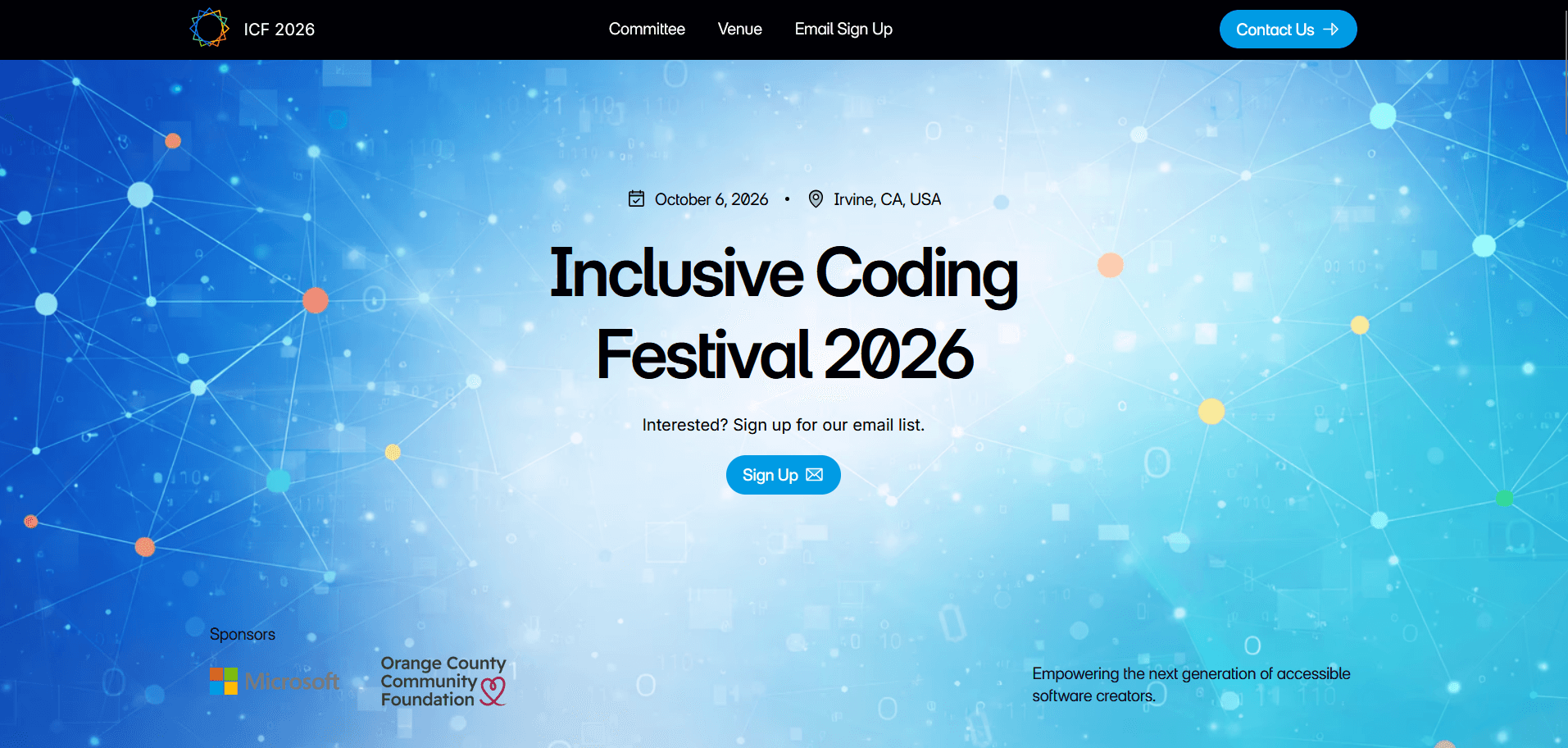
All right. The top stories. I got a few of them here, so let's get into the first one. The Inclusive Coding Festival, I, I was able to attend on October 10th. It was in Irvine. It's a conference that focuses on accessible computing some great talks.
Highlight for me, there was a great talk from Griffin Stapp And he talked about how one of the projects he worked on, it was originally meant to detect high-pitched noises for defense systems, but it got repurposed for use in cochlear hearing implants, I just think that's super interesting that something that can be for defense ends up being for accessibility.
Outside of the talks, the one part of the conference was that high school and college students presented projects where they combined AI with accessible computing. So I [00:20:00] went around to these different booths, talked to a few of the, the creators, and common theme I saw was AI assisting in practicing real-life situations, right?
So, hey, use the software to practice a real-life situation like your boss having unclear directions or small talk at the grocery store. I think it's, it's an underrated use case, uh, for, for AI,
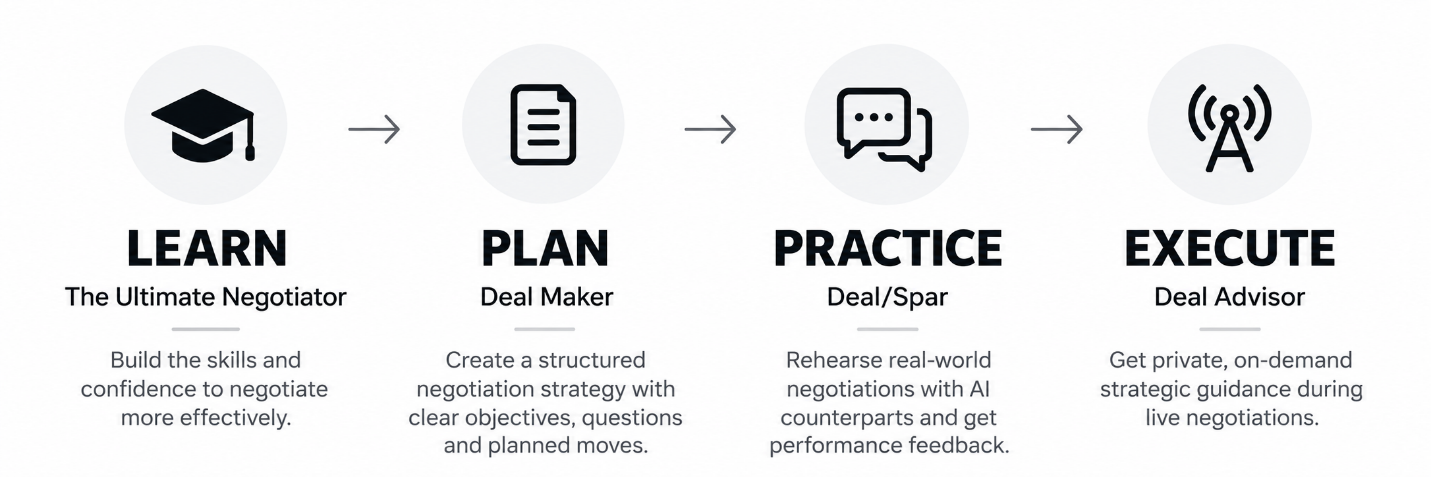
now, related to that, another piece of news, a second piece of news. The Edge Negotiation Group launched Deal Advisor, E-Edge Negotiation Group is based in El Segundo, Deal Advisor joins online meetings as a visible AI note-taker, and there's a separate interface that displays the live conversation transcript, and it allows users to request strategic guidance during the negotiation.
It analyzes counterparty language, negotiation tactics, highlights [00:21:00] opportunities, re-recommends responses, uh, and it's private, and it's not, not in the shared meeting. As somebody who's not great at negotiating things, I thought it was an interesting news story.
I haven't used it, but, again, it's, interesting to see AI being used to practice for human interaction
Then the last story that we've got is, uh, Disney and their involvement with Character.ai. So I was not familiar with Character.ai. It was founded in 2021 by , former Google engineers It started as a website, then became an app, but you basically had conversations with fictional AI characters, but these characters were licensed characters, Game of Thrones characters, Disney characters. Eventually, they got into some legal trouble, The mother of this boy said that the, the site - allegedly caused the suicide of a, of a 14-year-old boy, and [00:22:00] others have said that the AI characters encouraged self-harm or they impersonated medical professionals
On October 12th, they filed for bankruptcy. So Character AI based in Palo Alto, why am I talking about them? Well, on September 18th, 2026, their CEO actually got hired by Disney as the CTO, and 66 members of the team are joining him at Disney. And Disney is based here in Southern California
This is just strange to me.
It's strange to me that for Disney, a company who is very cognizant of their brand and, and wants to be very family-friendly, hiring the team who allowed their technology
to get into these, get into this legal trouble is questionable
All right, everybody. That is it for this episode Have a good one, y'all
[00:23:00]